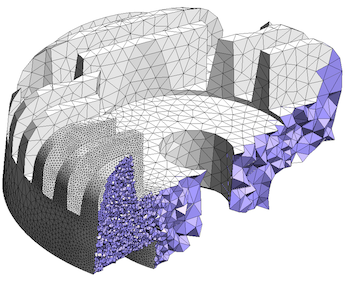
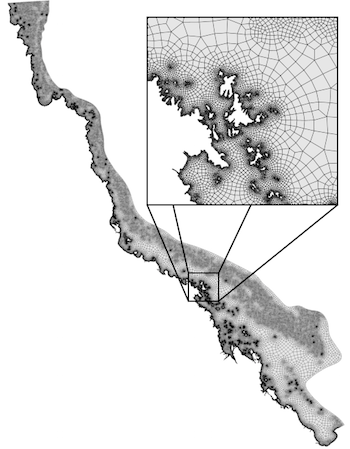
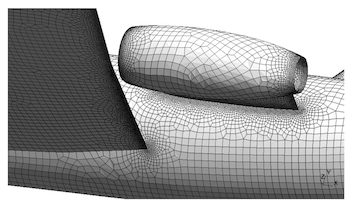
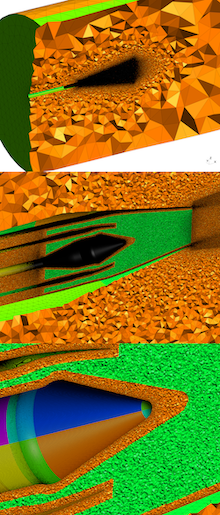
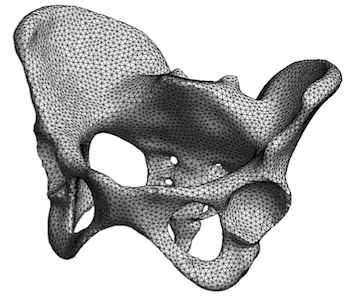
Gmsh is an open source 3D finite element mesh generator with a built-in CAD
engine and post-processor. Its design goal is to provide a fast, light and
user-friendly meshing tool with parametric input and flexible visualization
capabilities. Gmsh is built
around four modules
(geometry, mesh, solver and post-processing), which can be controlled with
the graphical user
interface, from
the command
line, using text files written in Gmsh's
own scripting
language (.geo files), or through the C++, C, Python, Julia and
Fortran application
programming interface.
See this general presentation for a high-level overview of Gmsh and the reference manual for the complete documentation, which includes the Gmsh tutorial. The source code repository contains the tutorial source files as well as many other examples.
Gmsh is distributed under the terms of the GNU General Public License (GPL):
pip install
            --upgrade gmsh
'
Make sure to read the tutorial and the FAQ before sending questions or bug reports.
git clone
          https://gitlab.onelab.info/gmsh/gmsh.git
'
pip install -i https://gmsh.info/python-packages-dev
        --force-reinstall --no-cache-dir gmsh
' (on Linux systems without
X windows, use python-packages-dev-nox instead of
python-packages-dev)
If you use Gmsh please cite the following reference in your work (books, articles, reports, etc.): C. Geuzaine and J.-F. Remacle. Gmsh: a three-dimensional finite element mesh generator with built-in pre- and post-processing facilities. International Journal for Numerical Methods in Engineering 79(11), pp. 1309-1331, 2009. You can also cite additional references for specific features and algorithms.
Please report all issues
on https://gitlab.onelab.info/gmsh/gmsh/issues.
Gmsh is copyright (C) 1997-2022 by C. Geuzaine and J.-F. Remacle (see the CREDITS file for more information) and is distributed under the terms of the GNU General Public License (GPL) (version 2 or later, with an exception to allow for easier linking with external libraries).
In short, this means that everyone is free to use Gmsh and to redistribute it on a free basis. Gmsh is not in the public domain; it is copyrighted and there are restrictions on its distribution (see the license and the related frequently asked questions). For example, you cannot integrate this version of Gmsh (in full or in parts) in any closed-source software you plan to distribute (commercially or not). If you want to integrate parts of Gmsh into a closed-source software, or want to sell a modified closed-source version of Gmsh, you will need to obtain a commercial license: please contact us for details.
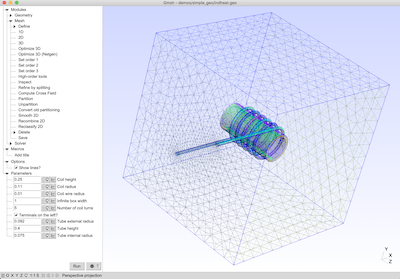
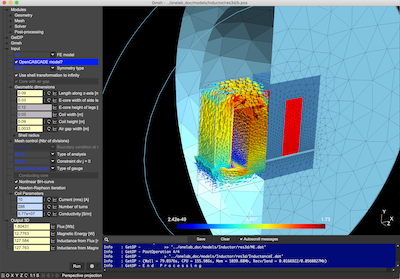
These are two screenshots of the Gmsh user interface, with either the light or dark user interface theme. See the ONELAB web site for more.
The massive viewership numbers for entertainment documentaries reveal a profound shift in consumer psychology.
The entertainment industry documentary has evolved from a niche marketing tool into one of the most compelling genres in modern media. Audiences no longer just want to watch the movie, listen to the album, or see the play—they want to see the nervous breakdowns, the financial ruin, the creative warfare, and the systemic exploitation that occurred to bring that art to life. The Evolution: From Promotional Featurette to High Art
Modern entertainment industry documentaries offer a sharp contrast. They function as investigative journalism and historical preservation. Rather than serving as marketing tools, these films investigate the darker, more complex realities of show business. They treat the entertainment world not just as a source of magic, but as a multi-billion-dollar corporate machine. 2. Unmasking the Human Cost of Stardom -GirlsDoPorn- 19 Year Old -Ep. 192 01.13.2013-
These films capture the volatile nature of making art under corporate pressure. They show how massive budgets, fragile egos, and bad luck can derail a project.
Once victims were flown to San Diego, they often found themselves isolated in hotel rooms with multiple male operators. Contract Pressure The Evolution: From Promotional Featurette to High Art
The story of the GirlsDoPorn (GDP) enterprise, including specific episodes like Episode 192
Our obsession with the entertainment industry documentary thrives on a mix of cultural cynicism and a desire for authenticity. In an era dominated by curated social media feeds and heavily managed corporate branding, audiences are naturally skeptical. We know that celebrity culture is manufactured. The industry documentary offers the ultimate antidote: the illusion of unvarnished truth. They treat the entertainment world not just as
: Women were often lured via Craigslist ads for "clothed modeling". False Promises