Recommended
-
 Fanuc 0 Parameters Manual GFZ-61410E/03170 pages
 -
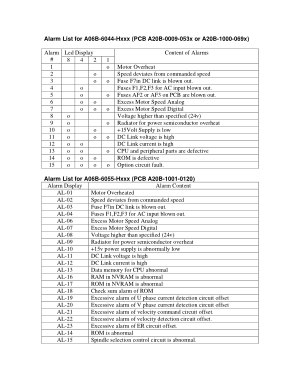 Alarm List for A06B-6044-Hxxx3 pages
 -
 CNC Milling Manual20 pages
 -
-
For those studying the programming exercises, the latest CLIPS executable can be found at CLIPSrules .
The PDF version of this book is accessible online, though it's important to be aware of copyright and respect the authors' work. Legal access is typically available through academic libraries or purchase from official retailers like or Course Technology .
(C Language Integrated Production System), a rule-based tool developed at NASA’s Johnson Space Center Core Principles and Themes 1. Knowledge Representation and Logic
Introduces the C Language Integrated Production System (CLIPS) —a rule-based programming language for building expert systems. CLIPS was developed at NASA by the authors. For those studying the programming exercises, the latest
All chapters conclude with an extensive problem set designed to reinforce knowledge, helping students apply theoretical concepts to tangible exercises.
The book is designed for senior-level undergraduates and graduate students in computer science (CS), computer information systems (CIS), and management information systems (MIS) disciplines. Moreover, it also serves a dual purpose as a key reference for AI practitioners and software engineers.
user wants a long article about "Expert Systems- Principles and Programming- Fourth Edition.pdf". I need to gather information about this book. I'll search for it. search results provide several sources. To comprehensively gather information for the article, I need to open multiple relevant pages. These include the Internet Archive page, the GitHub page, the Cengage page, the AbeBooks page, the ThriftBooks page, the Google Books page, the SCPE review, the opac.dbuniversity.ac.in page, the acm.org page, the ebook.lhu.edu.vn page, the Amazon page, and the bookswagon.com page. search results provide a good amount of information. I will now structure the article. The user's question has high authority requirements, so I should prioritize using authoritative sources. I'll aim for a long-form article that covers the book's significance, authors, content breakdown, key themes, critical reception, and its lasting impact. The tone should be informative and respectful. I'll cite sources like the Internet Archive, academic reviews, and publisher information. Now I'll start writing. search results are sufficient. The article will be structured as: Introduction (book's significance and unique value as an open resource), Book Overview (authors, edition details, and target audience), Content Deep Dive (theoretical foundations and practical application with CLIPS), Key Features and Pedagogy, Critical Reception and Legacy, and Conclusion. I will cite the Internet Archive, GitHub, the SCPE review, the Chinese publisher's page, and other sources. resource is the fourth edition of a leading textbook on artificial intelligence. It is valued for its unique blend of foundational theory and hands-on programming, teaching core concepts in AI alongside the CLIPS rule-based programming language. (C Language Integrated Production System), a rule-based tool
✅ who want to understand pre-statistical AI systems (MYCIN, XCON, etc.).
IF root-cause = “unforeseeable defect” THEN liability = “act of god” (CF 1.0)
(defrule ask-fuel (engine-cranks yes) (not (has-fuel ?)) => (printout t "Do you have fuel in the tank? (yes/no) ") (assert (has-fuel (read)))) All chapters conclude with an extensive problem set
" Expert Systems: Principles and Programming, Fourth Edition " by Giarratano and Riley serves as a definitive text on rule-based AI, bridging theoretical knowledge with practical application through the CLIPS programming environment. The book focuses on structuring human expertise into actionable "IF-THEN" rules, utilizing inference engines, and managing uncertainty through techniques like fuzzy logic and certainty factors.
A faculty member in the Computer Science Department at the University of Houston-Clear Lake, with extensive research experience from his work with NASA. He is responsible for developing the CLIPS user guides.
Addresses best practices for building well-structured, efficient rule-based systems.