accountant 2025 sigmaseries hindi short film better accountant 2025 sigmaseries hindi short film better
accountant 2025 sigmaseries hindi short film better Home News Planets Renderings Objects Drawings Tutorials accountant 2025 sigmaseries hindi short film better
The Sun Mercury Venus Earth Mars Jupiter Saturn Uranus Neptune Pluto

Accountant 2025 Sigmaseries Hindi Short Film Better _hot_ -

A sleek, modern office in Mumbai. It is 9:00 PM. The office is empty, save for the hum of servers and the sound of typing. Rain lashes against the glass windows.

Dramatic, synth-heavy, or slow-reverb background music (often inspired by international viral tracks) that plays during the protagonist's triumph. Why Audiences Say It Is "Better" Than Mainstream Cinema

The film brilliantly combines the high-stakes world of forensic accounting with the personal discipline of a sigma male. It turns a "boring" profession into an exciting thriller, proving that intellect and precision can be as thrilling as action scenes. C. Superior Visuals and Narrative Quality accountant 2025 sigmaseries hindi short film better

🎥 Check it out now on the Sigma Series channel.

Not directly. The 2016 Hollywood film The Accountant features a protagonist who is a deadly assassin and a math savant. While it popularized the "action accountant" trope, the 2025 Indian films and short films mentioned here are creating their own original, culturally specific stories. A sleek, modern office in Mumbai

Placing this story on a platform like Sigma Series offers immediate benefits. The app is designed for mobile-first consumption, meaning the content is formatted and paced perfectly for someone watching on their commute or during a break. Furthermore, being part of a curated "series" implies a level of quality control. The platform's focus on "emerging talents and experienced filmmakers" ensures that even a short film has a high production value and a compelling narrative. For the viewer, the curated nature of Sigma Series eliminates the guesswork, ensuring a consistently "better" viewing experience.

Showing that a forensic accountant can be a "Sigma" highlights the shift towards honoring brainpower in modern storytelling. Rain lashes against the glass windows

According to initial discussions, the "SigmaSeries" productions are setting a higher standard, often showcasing high-budget action thriller elements with high-quality cinematography. The storytelling is tight, designed specifically to resonate with viewers who prefer substance over filler. D. The Neurodivergent Angle

The (e.g., in a cafe, in an office, or at a party)?

Oberoi offers Aryan a 50-crore bribe to sign off on the fake audit. Aryan takes the pen, looks at the document, and instead of signing, he enters a single command into the system. "What did you do?" Oberoi screams.

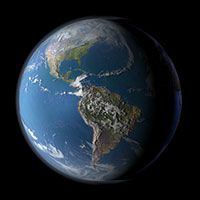
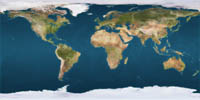
This map is a synthesis between my original earth map, gradient mapping of the USGS DEM information, hand painting, DEM modulation of detail, bathyspheric depth information, and the USGS Ocean clip. Bathyspheric data was used to modulate the color of the water so that deeper areas are a darker blue than shallow areas.
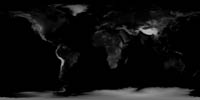
This is pieced together exclusively from the USGS DEM database. It contains landmass elevations only, with the ocean at zero, and the top of Mt. Everest at 255. Use this as a bump map to give the appearance of the Earth's rugged surface features. Some madmen have also used this data in POV Ray as a displacement map on a very finely divided sphere to produce a "true" 3D version of the Earth. The 10K version is VERY large, so make sure you really need that much detail.
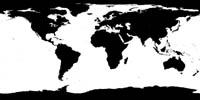
This is derived from USGS DEM data, with the addition of the Arctic ice areas which do not show up on USGS data (since they are not solid land masses.) Use this to control specularity and reflectance of the ocean surface.
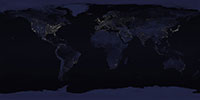
1024 x 512 color image. Very similar to the night lights map as published by NASA on their Blue Marble Page. I took their 30000 x 15000 black and white city lights map, and adapted it with a color table to a colorized version of my earth color map. This comes in 2k, 4k, and 10k versions in color, as opposed to the maximum 2k size of the NASA version of this map (higher resolution versions are available on the paid page only because of their size). Be sure to have a look at the tutorials page for a special rendering tip for using this map.
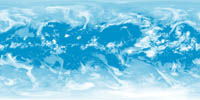
1024 x 512 color image. Based on a mosaic of satellite data, colorized, data errors retouched out, and fixed for seamless wrapping.
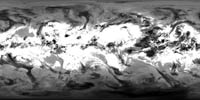
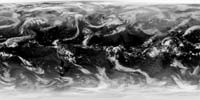
1024 x 512 greyscale image. Based on the same data as the color map, but leveled for the purpose of transparency mapping.

4096 x 2048 greyscale image. Built up out of real satellite imagery based upon a tutorial Dean Scott of Silicon Magic has posted. This is posted in JPEG2000 format. You need a special Photoshop plug-in to make use of jp2 images. I've thoughtfully provided a link:

JPEG 2000 Plugin from Fnord.

Accountant 2025 Sigmaseries Hindi Short Film Better _hot_ -

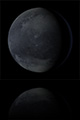
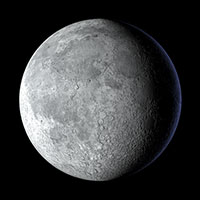
The Moon is a tricky planetoid to render. It has a very distinctive albedo which remains constant across its lit side, regardless of the angle of the surface to the sun. Therefore, standard rendering lighting models do not apply, as they always have a characteristic drop off in intensity as the angle of incidence to the light source increases. In Lightwave, there is an option to use a "non-Lambertian" lighting model on a surface setting. In previous versions of Cinema4D, you had a contrast control in the lighting setup. More recent versions of Cinema4D feature an Oren/Nayar illumination model in the lighting setup which allows you to simulate the lighting properties of "rough" surfaces. This is the method I used on the same pictured here.

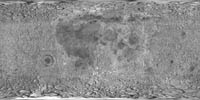
This map is based on a mosaic of satellite data, retouched for visible mosaic seams and for problems with the wrapping seam. Since this image contains highlight and shadow information independent of the location of your light source (inevitable because of how the moon is illuminated by the sun), you'll need to be careful how you light this so you don't break the illusion.

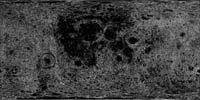
This map is my attempt to derive bump information from the above map. I did a high-pass filter operation to find all the edges of the craters, and then curved the result so that blacks and whites were white, and mid-tones were black. The results came out pretty well, as you can see from the sample image above.


this site works
best on Firefox:


website design © 2006 james hastings-trew